Insulated Truck Body for Cold Chain: A Buyer's Specification Guide
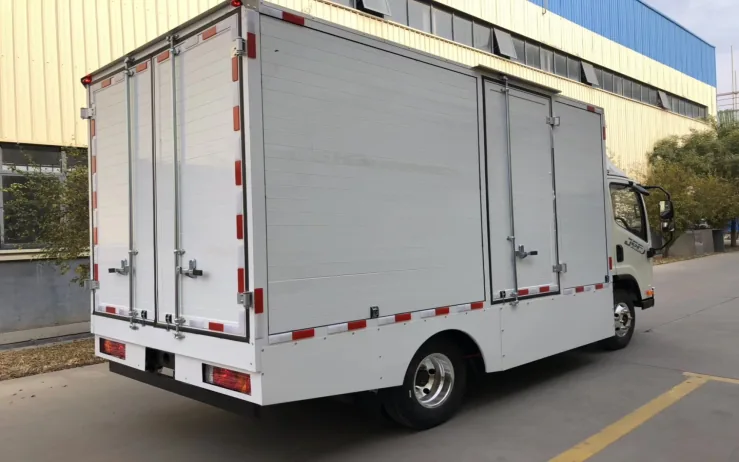
An insulated truck body has one job: keep the cargo inside the temperature range it was loaded at, from the cold store to the last delivery stop. Chilled produce, frozen food, dairy, meat and medicines all depend on it. Two insulated bodies can look identical and still perform very differently, because heat gets in through thin spots in the insulation, through metal that crosses the wall, and above all through the doors. This guide sets out the questions to settle with a supplier before you order.
1. Define the cargo and the temperature range
Everything else follows from this. Write down what you carry and the temperature it must stay at:
- Chilled goods such as fruit, vegetables and dairy, kept cool but above freezing.
- Frozen goods such as ice cream and frozen meat, kept well below freezing.
- Multi-temperature loads, where one body carries chilled and frozen goods in separate compartments.
Add the climate on your routes, the length of a typical trip and how many times the doors open per trip. A frozen body that runs long distances in a hot climate needs much more from its insulation and refrigeration than a chilled body doing short trips in a cool one.
2. Panels and insulation
Most insulated bodies use sandwich panels: an outer skin, an insulating foam core and an inner lining. When you compare offers, ask:
- What core material is used, and how thick is it in the roof, sides, front, floor and doors?
- What are the outer skin and inner lining made of, and how are they bonded to the core?
- How are panels joined at the corners, and where do metal fixings or frame members cross the wall? Each one is a path for heat.
- What insulation rating does the body have, and has it been tested to the standard that applies in your market?
Ask for test reports rather than a claim. If your country requires certification for carrying perishable food, confirm which certificate is needed and who issues it before you sign.
3. Doors and seals
Doors are where most cold is lost. Rear doors suit dock loading. A side door helps multi-drop delivery but adds another opening to seal. Check the gasket design, the hinges and locks, how the door closes against the frame, and how easily worn gaskets can be replaced. Strip curtains or an internal door help on routes with frequent stops.
4. Floor and interior
The floor must carry pallets and forklift or pallet-truck wheels, resist water and cleaning chemicals, and drain. Ask about the floor surface, drainage, and whether the interior can be washed down without water getting into the panels. Meat rails, cargo bars, air-flow channels and partitions for multi-temperature use all need to be planned before the body is built, because they affect the structure.
5. Refrigeration unit and chassis fit
An insulated body only keeps temperature for a while. For longer trips or frozen cargo you need a refrigeration unit, sized by the unit supplier for your body volume, temperature, climate and door openings. Agree who supplies the unit, where it mounts on the front wall, and how the front structure is reinforced for it. Also confirm the chassis model, wheelbase and payload left after the body and unit are fitted.
6. Durability and corrosion
Cold bodies are washed often and run in wet conditions. Check how the sub-frame and any steel parts are protected. At Hailong, steel cargo bodies are fully e-coated and finished with high-temperature baking paint, which reaches seams and corners where corrosion usually starts.
FAQ
Is an insulated body the same as a refrigerated body? Not quite. An insulated body slows heat transfer. A refrigerated body adds a unit that removes heat. Many cold-chain trucks need both.
Does Hailong build insulated bodies? Hailong builds closed van bodies in steel or aluminum, with side-door, rear-door and special-purpose options, and can build by drawing, by sample or to a target specification. Send your insulated or refrigerated body specification and our engineers will review it before quoting.
What should I send for a quotation? Chassis model and wheelbase, cargo and temperature range, inside dimensions, door layout, refrigeration unit (if chosen), certification needed, quantity and destination market.
Further reading: how to specify a closed van truck body, steel vs aluminum cargo bodies and how truck cargo bodies are made.
About Hailong Group
Hailong Group was founded in 1955 and is certified to IATF 16949, ISO 9001, ISO 14001 and ISO 45001. Truck body production is based in the group's Bei'an Intelligent Manufacturing Park, with a capacity of about 30,000 cargo body sets a year.
Send us your insulated body requirements
Tell us the chassis model, cargo, temperature range, dimensions, door layout, quantity and destination market. Email nora@qdhailong.com or call +86-532-66090318, or use the quotation form.